
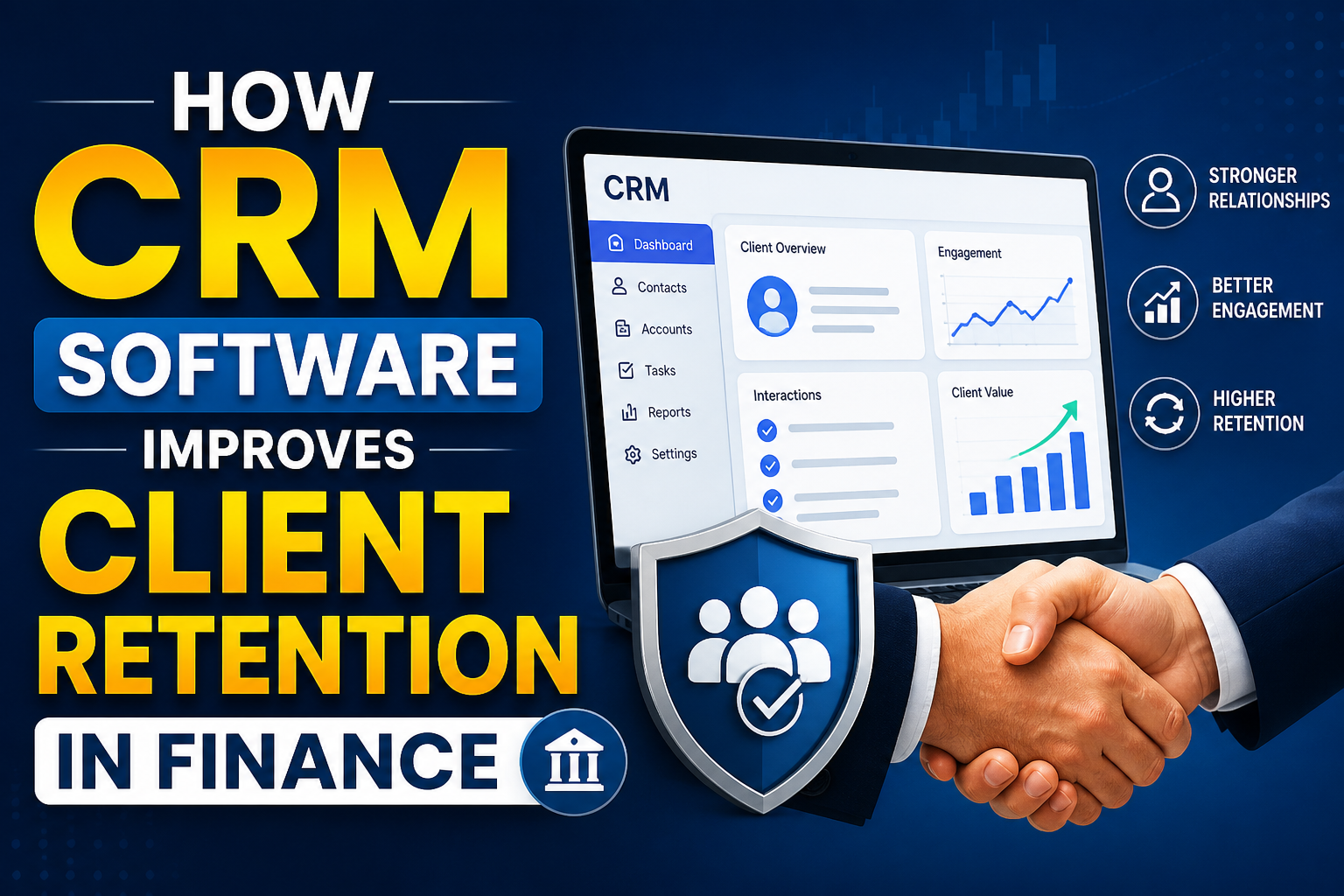
Explore how CRM tools help financial firms retain clients through better communication, automation, and data-driven insights.
Client retention is the backbone of any successful financial services business. Whether you are a financial advisor, wealth manager, insurance agent, or banking professional, keeping existing clients engaged is far more cost-effective than acquiring new ones. In a competitive landscape where trust and personalization matter most, CRM software has become a critical tool.
This article breaks down how CRM systems directly impact client retention in finance, with practical insights you can apply.
Understanding CRM in Financial Services
Customer Relationship Management (CRM) software is designed to centralize client data, streamline communication, and improve service delivery. In finance, this means tracking everything from client portfolios and risk profiles to communication history and life events.
Popular platforms like Salesforce CRM, HubSpot CRM, and Zoho CRM are widely used because they allow financial professionals to build deeper, more structured relationships with clients.
Why Client Retention Matters in Finance
Before diving into CRM benefits, it’s important to understand why retention is critical:
- Financial clients often have long-term relationships with advisors
- Lifetime value of a client is significantly higher than one-time transactions
- Trust builds over time, leading to referrals and upselling opportunities
- Switching costs are high, but dissatisfaction can still drive clients away
Retention is not just about keeping clients. It is about maintaining trust, consistency, and value over time.
1. Centralized Client Data Improves Personalization
One of the biggest reasons clients leave financial institutions is poor personalization. Generic advice does not work anymore.
CRM systems store:
- Financial goals
- Investment history
- Risk tolerance
- Communication preferences
- Important life events (birthdays, retirement plans, etc.)
With this data in one place, advisors can deliver highly personalized experiences.
Example:
Instead of sending a generic investment update, you can tailor recommendations based on a client’s portfolio and future goals.
This level of personalization makes clients feel understood, which directly improves retention.
2. Consistent and Timely Communication
In finance, silence is dangerous. If clients do not hear from you, they assume neglect.
CRM software automates and schedules communication such as:
- Portfolio updates
- Market insights
- Renewal reminders
- Policy updates
You can also set follow-up reminders to ensure no client is forgotten.
Impact on retention:
Clients who receive regular, meaningful communication are far less likely to switch providers.
3. Improved Client Experience Through Automation
Manual processes often lead to delays, errors, and missed opportunities. CRM systems automate repetitive tasks like:
- Data entry
- Appointment scheduling
- Email follow-ups
- Report generation
This frees up time for financial professionals to focus on relationship building.
Result:
Faster service + fewer mistakes = better client satisfaction
And satisfied clients stay longer.
4. Better Client Insights with Analytics
Modern CRM systems offer analytics that help you understand client behavior.
You can track:
- Engagement levels
- Investment trends
- Response to campaigns
- Service usage patterns
With this data, you can identify at-risk clients early.
Example:
If a client stops opening emails or engaging with updates, it may signal dissatisfaction. You can proactively reach out before they leave.
This predictive approach is one of the strongest retention drivers.
5. Proactive Service Instead of Reactive Support
Traditional financial services often operate reactively. Clients reach out when they have problems.
CRM flips this approach.
With reminders and alerts, you can:
- Check in before major financial milestones
- Suggest portfolio adjustments proactively
- Notify clients about market changes that affect them
Why it matters:
Clients value advisors who anticipate their needs rather than just respond.
This builds long-term trust and loyalty.
6. Enhanced Relationship Management
Financial services are relationship-driven. CRM tools help you nurture those relationships at scale.
Features include:
- Interaction history tracking
- Notes on client preferences
- Relationship mapping (family, business connections)
This ensures every interaction feels informed and relevant.
Example:
If a client previously discussed retirement planning, your next conversation can build on that instead of starting from scratch.
That continuity strengthens the relationship.
7. Segmentation for Targeted Engagement
Not all clients are the same. CRM allows you to segment clients based on:
- Income level
- Investment size
- Risk appetite
- Life stage
You can then create targeted communication strategies.
Example segments:
- Young investors → education-focused content
- High-net-worth individuals → exclusive opportunities
- Retirees → income stability strategies
Targeted engagement increases relevance, which improves retention.
8. Faster Issue Resolution
Nothing damages client relationships faster than unresolved issues.
CRM systems streamline support by:
- Logging complaints and queries
- Assigning tasks to the right team
- Tracking resolution timelines
This ensures no issue falls through the cracks.
Outcome:
Quick, efficient problem-solving builds confidence and prevents churn.
9. Regulatory Compliance and Trust
Finance is a highly regulated industry. CRM systems help maintain compliance by:
- Recording communication logs
- Storing client consent and documentation
- Tracking advisory actions
This transparency protects both the client and the advisor.
Retention impact:
Clients are more likely to stay with firms they trust to handle their data and finances responsibly.
10. Integration with Financial Tools
Modern CRM platforms integrate with:
- Portfolio management systems
- Accounting software
- Email and communication tools
- Marketing automation platforms
This creates a seamless ecosystem where all client-related activities are connected.
Benefit:
A unified system leads to smoother interactions and a better overall experience.
11. Scalability Without Losing Personal Touch
As your client base grows, maintaining personal relationships becomes challenging.
CRM allows you to scale while still delivering personalized service through:
- Automated workflows
- Data-driven insights
- Smart reminders
You can manage hundreds or thousands of clients without compromising quality.
12. Building Long-Term Loyalty
Retention is not just about preventing churn. It is about building loyalty.
CRM helps you:
- Celebrate client milestones
- Offer exclusive insights
- Provide consistent value over time
When clients feel valued, they stay longer and often refer others.
Common Mistakes to Avoid
Even with CRM, retention can fail if not used properly. Watch out for:
- Over-automation leading to robotic communication
- Poor data entry resulting in inaccurate insights
- Ignoring analytics and relying only on intuition
- Not training your team properly on CRM usage
CRM is only as effective as how you use it.
Practical Tips for Financial Professionals
If you want to improve retention using CRM, focus on these actions:
- Keep client data updated regularly
- Use automation, but maintain a human touch
- Set reminders for periodic check-ins
- Monitor client engagement metrics
- Personalize communication whenever possible
