
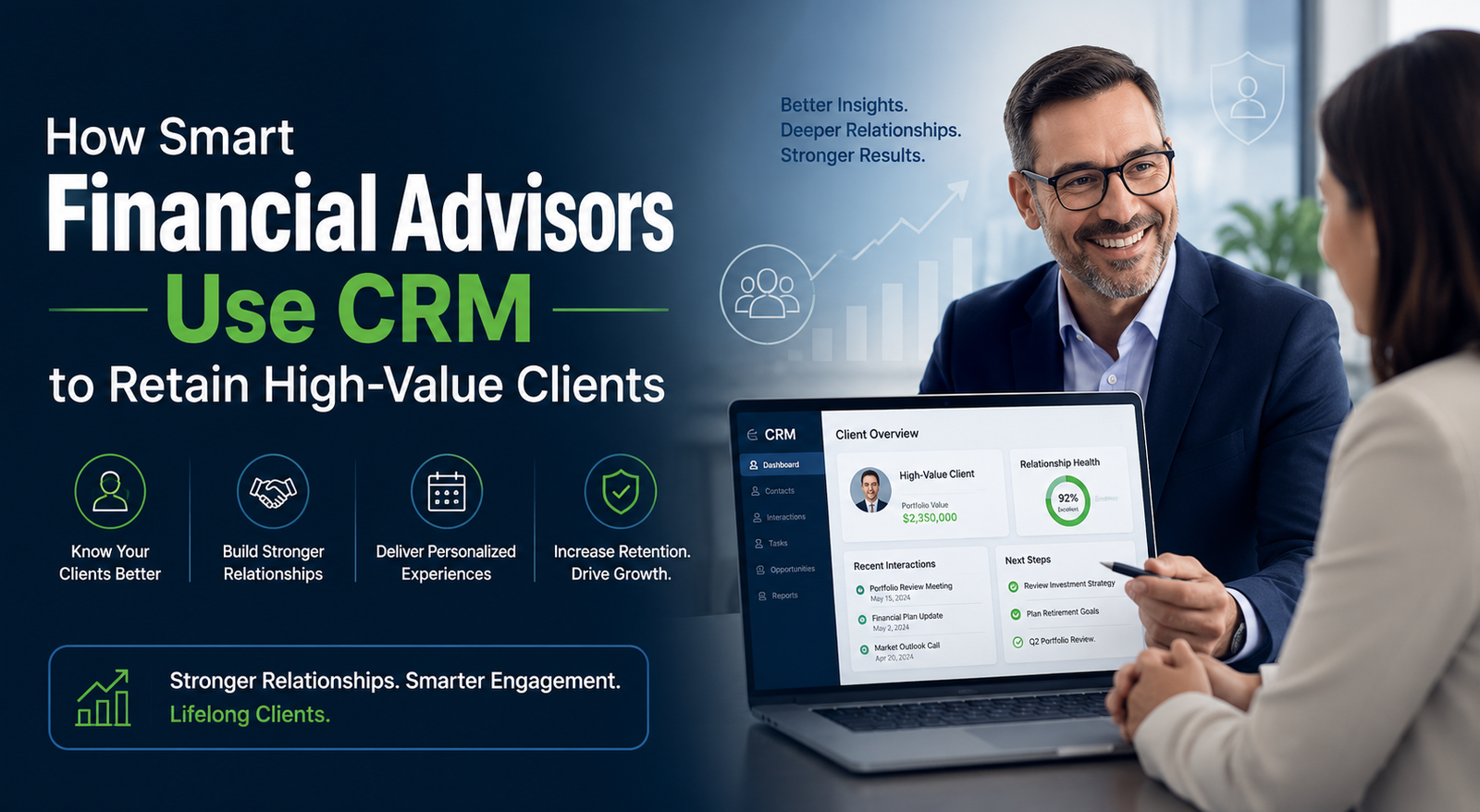
Discover how financial advisors use CRM systems to improve client retention, automate follow-ups, and build long-term relationships with high-value investors.
In financial advisory, acquiring a new client is expensive. Retaining a high-value client is far more profitable. Wealthy clients expect personalized service, fast communication, and proactive financial guidance. If advisors fail to deliver a consistent experience, clients can quickly move to another firm.
This is where Customer Relationship Management (CRM) systems become essential. Modern CRM platforms help financial advisors organize client data, automate follow-ups, personalize communication, and strengthen long-term relationships.
Today, successful financial advisors are not just selling investment products. They are building trust-driven relationships backed by technology.
In this blog, we will explore how smart financial advisors use CRM systems to retain high-value clients and improve long-term client loyalty.
Why Client Retention Matters More Than Ever
High-value clients often contribute a significant percentage of a firm’s revenue. Losing even one major client can impact profitability and reputation.
Retention matters because:
- Existing clients are easier to serve than acquiring new ones
- Loyal clients generate referrals
- Long-term clients increase Assets Under Management (AUM)
- Retained clients are more likely to purchase additional services
- Strong relationships create predictable recurring revenue
However, managing wealthy clients manually through spreadsheets, notes, or emails creates gaps in communication and service quality. CRM software solves this problem by centralizing client management.
What Is CRM for Financial Advisors?
A CRM for financial advisors is software designed to manage client relationships, communication history, financial goals, tasks, and interactions in one place.
Unlike generic CRM platforms, financial advisory CRMs often include:
- Portfolio tracking
- Client risk profiling
- Meeting reminders
- Compliance documentation
- Automated workflows
- Financial planning integrations
- Personalized reporting
These features help advisors deliver a premium client experience consistently.
1. Centralized Client Data Improves Personalization
High-net-worth clients expect advisors to understand their financial goals, family situation, investment preferences, and communication style.
A CRM stores all important client information in one dashboard, including:
- Investment history
- Retirement plans
- Risk tolerance
- Tax preferences
- Family details
- Important life events
- Communication records
This allows advisors to personalize every interaction.
For example, if a client recently discussed college planning for their children, the advisor can follow up later with customized investment recommendations related to education planning.
Personalization makes clients feel valued rather than treated like account numbers.
2. Automated Follow-Ups Prevent Client Neglect
One of the biggest reasons clients leave advisory firms is poor communication.
Busy advisors often forget follow-ups, annual reviews, or important milestones. CRM automation ensures no client gets ignored.
Smart advisors use CRM systems to automate:
- Meeting reminders
- Birthday wishes
- Portfolio review schedules
- Renewal alerts
- Follow-up emails
- Tax season reminders
- Investment maturity notifications
Automation creates consistency without increasing workload.
Clients appreciate proactive communication because it builds confidence that their finances are being monitored carefully.
3. CRM Helps Advisors Deliver Faster Responses
Wealthy clients expect quick answers and smooth communication.
Without a CRM, advisors waste time searching emails, spreadsheets, or notes to find client information.
With a CRM, advisors can instantly access:
- Past conversations
- Financial documents
- Current portfolio status
- Pending tasks
- Meeting history
This reduces response time significantly.
Fast and informed responses improve trust because clients feel their advisor is organized and attentive.
4. Better Segmentation Creates Premium Client Experiences
Not every client requires the same level of service.
Smart financial advisors use CRM segmentation to categorize clients based on:
- Assets under management
- Revenue contribution
- Investment goals
- Age group
- Risk profile
- Service preferences
This allows firms to create customized service strategies for high-value clients.
For example:
- VIP clients may receive quarterly strategy meetings
- Retirement-focused clients may get pension planning updates
- Business owners may receive tax optimization guidance
Segmentation ensures top clients receive white-glove service without overwhelming advisors.
5. CRM Enables Proactive Financial Planning
Top-performing advisors do not wait for clients to ask questions. They proactively identify opportunities and risks.
CRM systems help advisors track:
- Upcoming life events
- Policy renewals
- Portfolio imbalances
- Retirement milestones
- Market exposure risks
Using CRM alerts and workflows, advisors can contact clients before issues arise.
For example:
- Suggest tax-saving investments before financial year-end
- Recommend portfolio diversification during market volatility
- Update estate planning after family changes
Proactive service strengthens trust and increases client retention.
6. Consistent Communication Builds Long-Term Trust
Trust is the foundation of financial advisory relationships.
CRM platforms help advisors maintain consistent communication through:
- Personalized newsletters
- Market updates
- Investment insights
- Scheduled check-ins
- Financial education content
Regular communication reassures clients even during uncertain market conditions.
When clients hear from their advisor consistently, they are less likely to feel disconnected or anxious about their investments.
7. CRM Supports Multi-Channel Communication
Modern clients communicate through multiple channels including:
- Phone calls
- SMS
- Video meetings
- Client portals
CRM systems integrate these communication channels into one platform.
This allows advisors to track every conversation and maintain continuity.
For example, if a client sends an email regarding portfolio concerns, the advisor can view previous discussions and respond with full context immediately.
A seamless communication experience improves client satisfaction.
8. CRM Helps Financial Firms Improve Team Collaboration
High-value clients often interact with multiple people inside a financial firm including:
- Advisors
- Relationship managers
- Tax consultants
- Support staff
Without centralized systems, communication gaps can occur.
CRM software ensures every team member has access to updated client information. This creates a smoother client experience because everyone stays aligned.
Clients do not need to repeat the same information multiple times, which improves professionalism and efficiency.
9. Data Analytics Help Identify Retention Risks
Advanced CRM systems provide analytics that help advisors identify clients who may be at risk of leaving.
Warning signs may include:
- Reduced engagement
- Missed meetings
- Lower response rates
- Declining account activity
- Negative feedback
CRM reports help advisors take corrective action early.
For example:
- Schedule a personal review meeting
- Offer new financial planning solutions
- Address concerns proactively
Retention analytics help firms protect valuable client relationships.
10. CRM Increases Cross-Selling Opportunities
Satisfied clients are more open to additional financial services.
CRM systems help advisors identify cross-selling opportunities such as:
- Insurance products
- Retirement planning
- Estate planning
- Tax advisory services
- Wealth management
- Education planning
Because the CRM stores complete financial profiles, advisors can recommend highly relevant solutions instead of generic sales pitches.
This improves both revenue and client satisfaction.
Key Benefits of CRM for Financial Advisors
Here are the biggest advantages smart advisors gain from CRM systems:
| Benefit | Impact |
|---|---|
| Centralized data | Better client understanding |
| Automation | Saves time and reduces errors |
| Personalized communication | Stronger relationships |
| Faster response times | Improved trust |
| Workflow management | Better operational efficiency |
| Client segmentation | Premium service delivery |
| Analytics and reporting | Smarter decision-making |
| Compliance support | Reduced regulatory risks |
Features Financial Advisors Should Look for in a CRM
Choosing the right CRM is important for long-term success.
Key features include:
- Contact and relationship management
- Workflow automation
- Task management
- Calendar integration
- Document storage
- Client communication tracking
- Portfolio integration
- Compliance tools
- Reporting and analytics
- Mobile accessibility
The ideal CRM should support both relationship building and operational efficiency.
Best CRM Platforms for Financial Advisors
Popular CRM solutions used in the financial advisory industry include:
- Salesforce Financial Services Cloud
- Wealthbox CRM
- Redtail CRM
- HubSpot CRM
- Zoho CRM
- Microsoft Dynamics 365
- AdvisorEngine CRM
Each platform offers different strengths depending on firm size, budget, and workflow needs.
Common Mistakes Advisors Make Without CRM
Financial firms relying on manual systems often face:
- Missed follow-ups
- Inconsistent communication
- Poor data organization
- Compliance risks
- Delayed responses
- Weak personalization
- Client dissatisfaction
Over time, these issues reduce client trust and increase churn rates.
CRM systems eliminate many of these operational weaknesses.
