
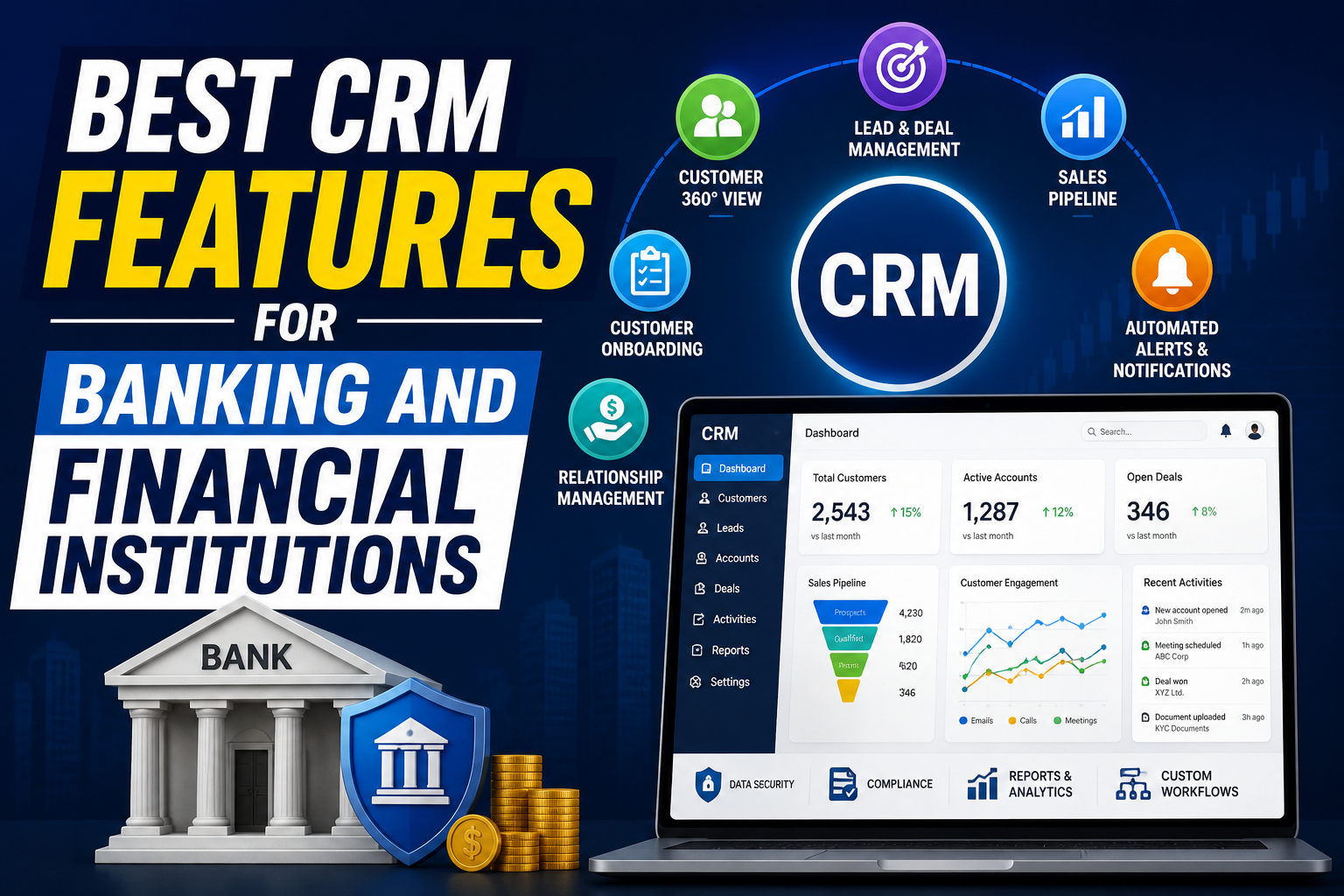
Discover the must-have CRM features for banks and financial firms to enhance customer experience and improve operational efficiency.
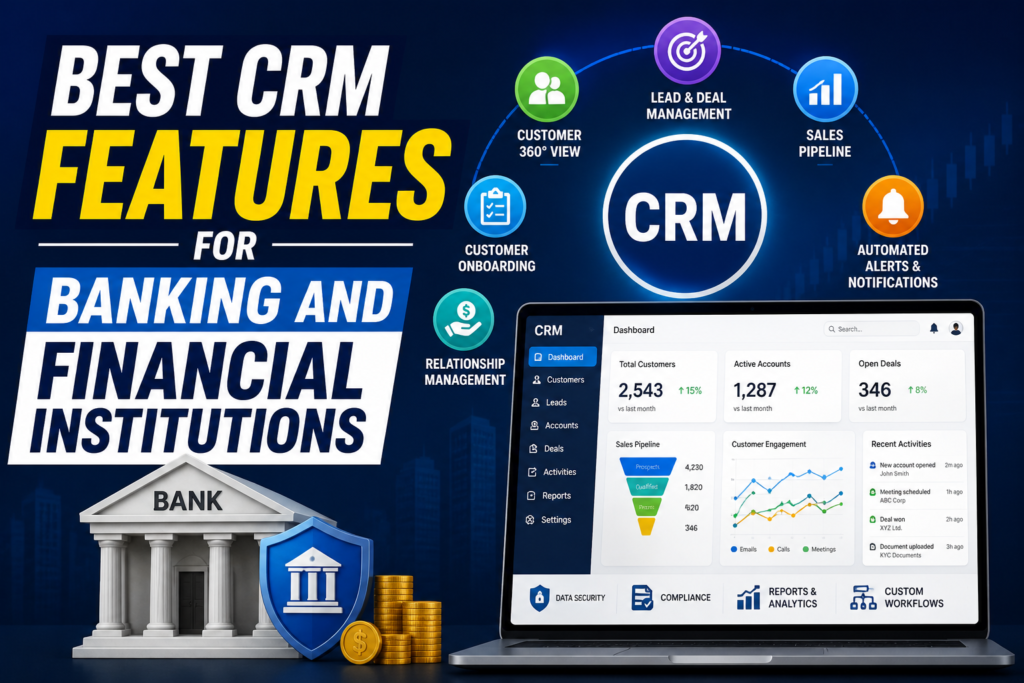
The banking and financial services industry has changed dramatically over the last decade. Customers expect personalized experiences, faster service, and seamless digital interactions across channels. At the same time, institutions must deal with strict regulatory requirements, growing competition, and massive volumes of data.
This is where CRM (Customer Relationship Management) systems play a critical role.
A modern banking CRM is not just a contact database. It is a centralized platform that helps financial institutions manage customer relationships, streamline operations, improve compliance, and drive revenue growth.
In this blog, we will break down the best CRM features for banking and financial institutions, why they matter, and how they help banks stay competitive.
What is CRM in Banking?
CRM in banking refers to specialized software designed to manage customer data, interactions, and relationships across multiple touchpoints.
It provides a 360-degree view of customers, combining transaction history, communication records, financial preferences, and behavioral insights into one unified system.
This allows banks to deliver personalized services, improve decision-making, and enhance overall customer experience.
Why CRM is Essential for Financial Institutions
Before diving into features, it’s important to understand why CRM is no longer optional in banking.
- Customers expect personalized banking experiences
- Digital banking is now the norm
- Regulatory compliance is becoming stricter
- Competition from fintech companies is rising
CRM systems help institutions centralize data, automate workflows, and improve service delivery while ensuring compliance.
1. 360-Degree Customer View
One of the most important CRM features is a complete customer profile.
This includes:
- Account details
- Transaction history
- Communication records
- Financial goals and preferences
With all this data in one place, relationship managers can better understand customers and provide relevant solutions.
This feature eliminates data silos and enables banks to deliver more personalized services, which directly improves customer satisfaction and retention.
2. Omnichannel Communication Management
Customers interact with banks through multiple channels such as:
- Mobile apps
- Phone
- Branch visits
- Chatbots
A good CRM tracks all these interactions in one place.
This ensures:
- Consistent communication
- Faster response times
- Better customer experience
It also allows teams to pick up conversations where they left off, regardless of the channel used.
3. Personalization and Customer Segmentation
Modern customers expect banks to understand their needs.
CRM systems use data and AI to:
- Segment customers based on behavior
- Analyze financial patterns
- Recommend relevant products
For example:
- Offering loans to customers with high credit activity
- Suggesting investment plans based on income patterns
This level of personalization improves engagement and increases conversion rates.
4. Lead and Opportunity Management
CRM helps banks track potential customers from the first interaction to conversion.
Key capabilities include:
- Lead capture from multiple channels
- Automated lead scoring
- Pipeline tracking
- Opportunity forecasting
This ensures that no potential customer is missed and helps improve sales efficiency.
Banks can also identify cross-selling and upselling opportunities more effectively.
5. Marketing Automation
Marketing automation is a game-changer for financial institutions.
With CRM, banks can:
- Run targeted campaigns
- Automate email and SMS marketing
- Track campaign performance
- Perform A/B testing
This allows banks to deliver the right message to the right customer at the right time.
It also reduces manual effort and improves marketing ROI.
6. Workflow Automation
Banks deal with repetitive processes like:
- Customer onboarding
- Loan approvals
- Document verification
- Follow-ups
CRM automates these workflows, which:
- Saves time
- Reduces errors
- Improves operational efficiency
Automation also ensures faster service delivery, which is critical in customer satisfaction.
7. Compliance and Regulatory Management
Compliance is a major concern in banking.
CRM systems help institutions:
- Track customer interactions
- Maintain audit trails
- Ensure KYC and AML compliance
- Automate reporting
This reduces the risk of regulatory violations and improves transparency.
8. Loan and Account Management
A banking CRM is not just about communication. It also manages financial products.
Key functionalities include:
- Loan lifecycle tracking
- Account management
- Renewal reminders
- Document tracking
This helps banks stay organized and ensures that critical processes are not missed.
9. Customer Service and Case Management
Customer service is a major differentiator in banking.
CRM systems provide:
- Ticketing systems
- Case tracking
- Automated responses
- Service history
This allows support teams to resolve issues faster and more efficiently.
It also improves customer trust and loyalty.
10. Data Analytics and Reporting
Data is one of the biggest assets in banking.
CRM platforms provide:
- Real-time dashboards
- Predictive analytics
- Customer insights
- Performance reports
These insights help banks:
- Make better decisions
- Identify trends
- Forecast revenue
Advanced CRMs also use AI to predict customer behavior and recommend actions.
11. Customer Onboarding Management
First impressions matter.
CRM systems streamline onboarding by:
- Automating documentation
- Reducing turnaround time
- Personalizing onboarding journeys
This ensures a smooth and efficient experience for new customers.
12. Integration with Banking Systems
A CRM should integrate seamlessly with:
- Core banking systems
- Payment gateways
- Mobile banking apps
- Third-party tools
This creates a unified ecosystem where data flows smoothly across platforms.
It also improves operational efficiency and reduces manual work.
13. Security and Data Protection
Security is critical in financial services.
CRM systems offer:
- Data encryption
- Access control
- Fraud detection
- Secure data storage
These features ensure that sensitive customer data is protected at all times.
Benefits of CRM for Banking Institutions
When implemented correctly, CRM systems offer several benefits:
1. Improved Customer Experience
CRM enables personalized interactions, faster service, and better engagement.
2. Increased Customer Retention
Banks can build stronger relationships through data-driven insights.
3. Higher Revenue Growth
Better targeting and cross-selling lead to increased sales.
4. Enhanced Operational Efficiency
Automation reduces manual work and improves productivity.
5. Better Decision-Making
Real-time data and analytics enable smarter strategies.
Final Thoughts
CRM is no longer just a tool for managing contacts. It has become a strategic platform that drives growth, efficiency, and customer satisfaction in the banking industry.
The best CRM systems for financial institutions combine:
- Customer intelligence
- Automation
- Compliance management
- Advanced analytics
Banks that invest in the right CRM features can deliver better customer experiences, improve operational performance, and stay ahead in an increasingly competitive market.
If you are planning to implement a CRM in your financial institution, focus on features that align with your business goals and customer expectations. That’s where the real value lies.
