
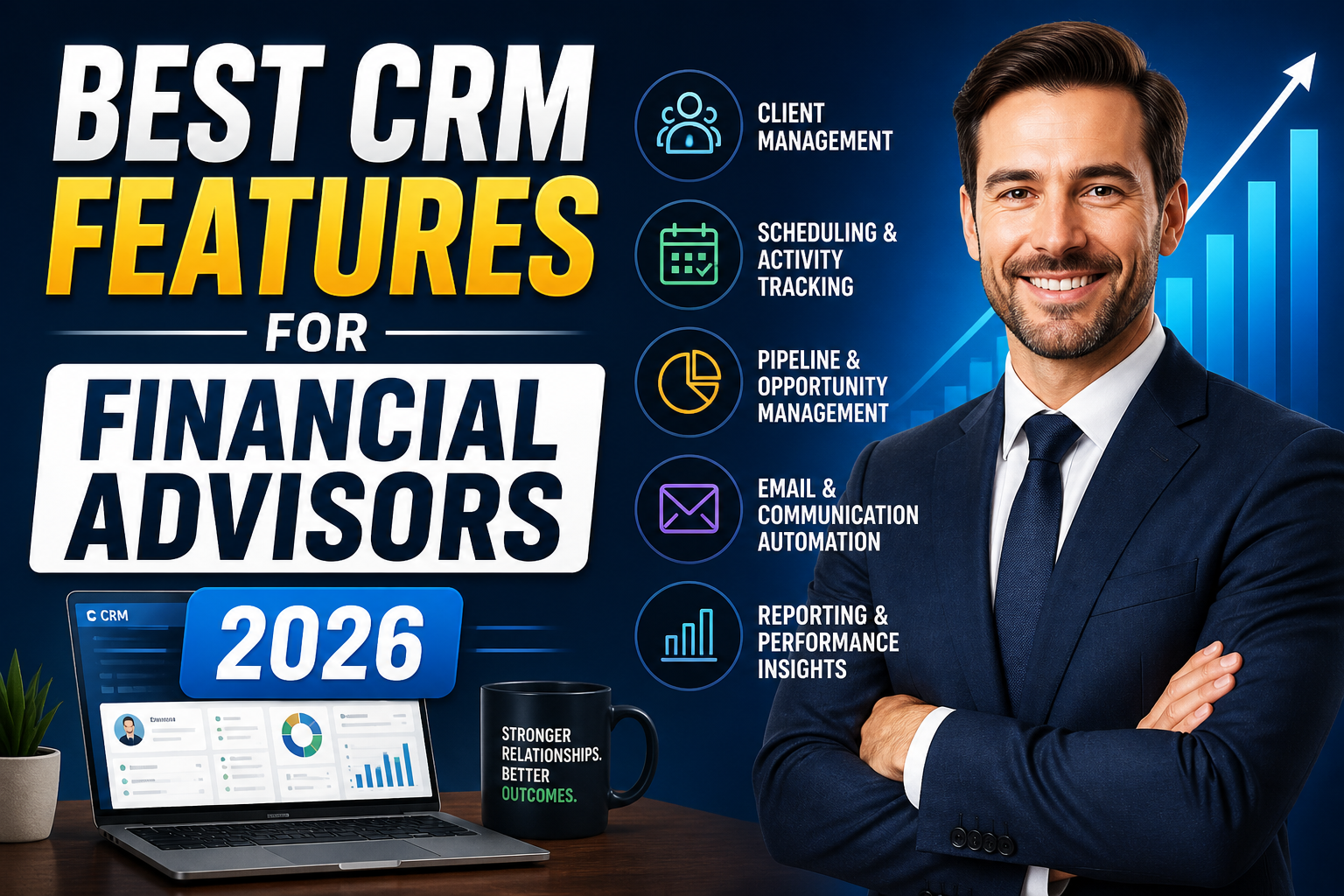
Find out the must-have CRM features for financial advisors, including automation, analytics, and secure client data management.
The role of a financial advisor has changed a lot in recent years. Clients expect faster responses, personalized advice, and complete transparency. At the same time, advisors are dealing with stricter regulations, more data, and increasing competition. This is where a modern CRM (Customer Relationship Management) system becomes essential.
In 2026, CRM software is no longer just about storing contacts. It has evolved into a full business operating system for financial advisors. From AI-powered insights to compliance tracking, the right CRM can directly impact client retention, productivity, and revenue growth.
This guide breaks down the most important CRM features financial advisors should look for in 2026, explained in a practical and easy-to-understand way.
1. Centralized Client Data Management
At the core of every CRM is client data. But in 2026, it’s not just about storing names and phone numbers.
Modern CRM systems create complete client profiles, including:
- Financial goals
- Investment history
- Risk tolerance
- Family and household relationships
- Communication records
This centralized approach allows advisors to access everything in one place, improving decision-making and client service.
Why it matters:
When all data is unified, advisors can provide more accurate and personalized financial advice without switching between tools.
2. AI-Powered Insights and Automation
Artificial Intelligence is one of the biggest upgrades in CRM technology today. In 2026, AI is not optional anymore, it’s expected.
AI-powered CRM features include:
- Predictive analytics for client behavior
- Automated follow-up reminders
- Lead scoring and prioritization
- Smart recommendations for cross-selling
Some platforms even use AI assistants to automate tasks like data entry, anomaly detection, and client segmentation.
Why it matters:
AI reduces manual work and helps advisors focus on high-value tasks like client relationships and strategic planning.
3. Workflow Automation for Advisory Processes
Financial advisors handle repetitive processes daily, such as onboarding clients, scheduling reviews, and managing documentation.
CRM systems now automate:
- Client onboarding workflows
- Task assignments and reminders
- Email and communication sequences
- Service calendars
Automation ensures consistency and reduces human error, especially as your client base grows.
Why it matters:
It saves time and ensures that no important task or follow-up is missed.
4. Compliance and Regulatory Tracking
Compliance is a critical part of financial advisory services. A good CRM in 2026 includes built-in compliance tools.
Key compliance features:
- Activity tracking and audit trails
- Secure document storage
- Automated compliance workflows
- Data encryption and privacy controls
Modern CRMs help advisors stay aligned with regulations while reducing compliance risks.
Why it matters:
It protects both the advisor and the client while simplifying regulatory requirements.
5. Client Portal and Communication Tools
Clients today expect real-time access to their financial information. CRM systems now include client-facing portals.
These portals allow clients to:
- View portfolio performance
- Access financial documents
- Communicate securely with advisors
- Track progress toward financial goals
In addition, integrated communication tools (email, chat, video) make interactions smoother and more professional.
Why it matters:
Better communication builds trust and improves client retention.
6. Integration with Financial Tools
A CRM is most powerful when it connects with other systems.
Top integrations include:
- Portfolio management software
- Financial planning tools
- Accounting systems
- Email and calendar apps
For example, platforms like Salesforce Financial Services Cloud offer thousands of integrations, making them highly flexible for advisory firms.
Why it matters:
Integration eliminates data silos and creates a seamless workflow across your business.
7. Customizable Dashboards and Reporting
Financial advisors rely heavily on data to make decisions. CRM systems now offer advanced dashboards and reporting tools.
Key capabilities:
- Real-time performance tracking
- Custom financial reports
- Client segmentation insights
- Revenue and pipeline analysis
Custom dashboards help advisors focus on what matters most to their business.
Why it matters:
Clear insights lead to better strategy and improved financial outcomes.
8. Relationship Mapping and Household Management
Unlike traditional sales businesses, financial advisors often deal with entire families, not just individuals.
CRM systems now include:
- Household relationship tracking
- Multi-generational client views
- Linked financial accounts
This feature helps advisors understand complex relationships and provide more holistic financial advice.
Why it matters:
It strengthens long-term relationships and opens opportunities for multi-generational wealth management.
9. Mobile Access and Cloud-Based Systems
In 2026, flexibility is key. Advisors need access to their CRM anytime, anywhere.
Modern CRM platforms offer:
- Cloud-based access
- Mobile apps for on-the-go usage
- Real-time updates across devices
This ensures advisors can manage clients even outside the office.
Why it matters:
It improves productivity and responsiveness, especially in client-facing roles.
10. Personalization and Client Experience Tools
Personalization is a major trend in financial services. CRM systems now use data to tailor experiences for each client.
Features include:
- Personalized communication
- Custom financial recommendations
- Behavioral tracking
- Proactive engagement alerts
CRM systems can even predict client needs based on past interactions and financial behavior.
Why it matters:
Personalized service leads to higher client satisfaction and loyalty.
11. Task and Activity Management
Staying organized is critical for financial advisors handling multiple clients.
CRM task management features include:
- To-do lists linked to client profiles
- Automated reminders
- Activity timelines
- Meeting scheduling
This ensures that all client interactions are tracked and managed efficiently.
Why it matters:
It helps advisors stay on top of responsibilities without missing important actions.
12. Data Security and Privacy Protection
Financial data is highly sensitive. CRM systems in 2026 prioritize security more than ever.
Security features include:
- End-to-end encryption
- Multi-factor authentication
- Role-based access control
- Secure cloud storage
Why it matters:
Strong security builds trust and ensures compliance with data protection laws.
13. Scalability for Growing Firms
As advisory firms grow, their CRM needs also evolve.
A scalable CRM should:
- Handle increasing client data
- Support team collaboration
- Adapt to new workflows
- Offer advanced features as needed
Why it matters:
You don’t want to switch systems every time your business grows.
Final Thoughts
The best CRM features for financial advisors in 2026 go far beyond basic contact management. Today’s CRM systems act as a central hub that connects data, automates processes, ensures compliance, and enhances client relationships.
If you’re choosing a CRM, focus on these key areas:
- AI and automation capabilities
- Compliance and security features
- Integration with financial tools
- Client experience and personalization
Ultimately, the right CRM is the one your team actually uses daily and that fits your workflow. As the financial advisory industry continues to evolve, having a strong CRM is no longer optional. It is a competitive advantage.
