
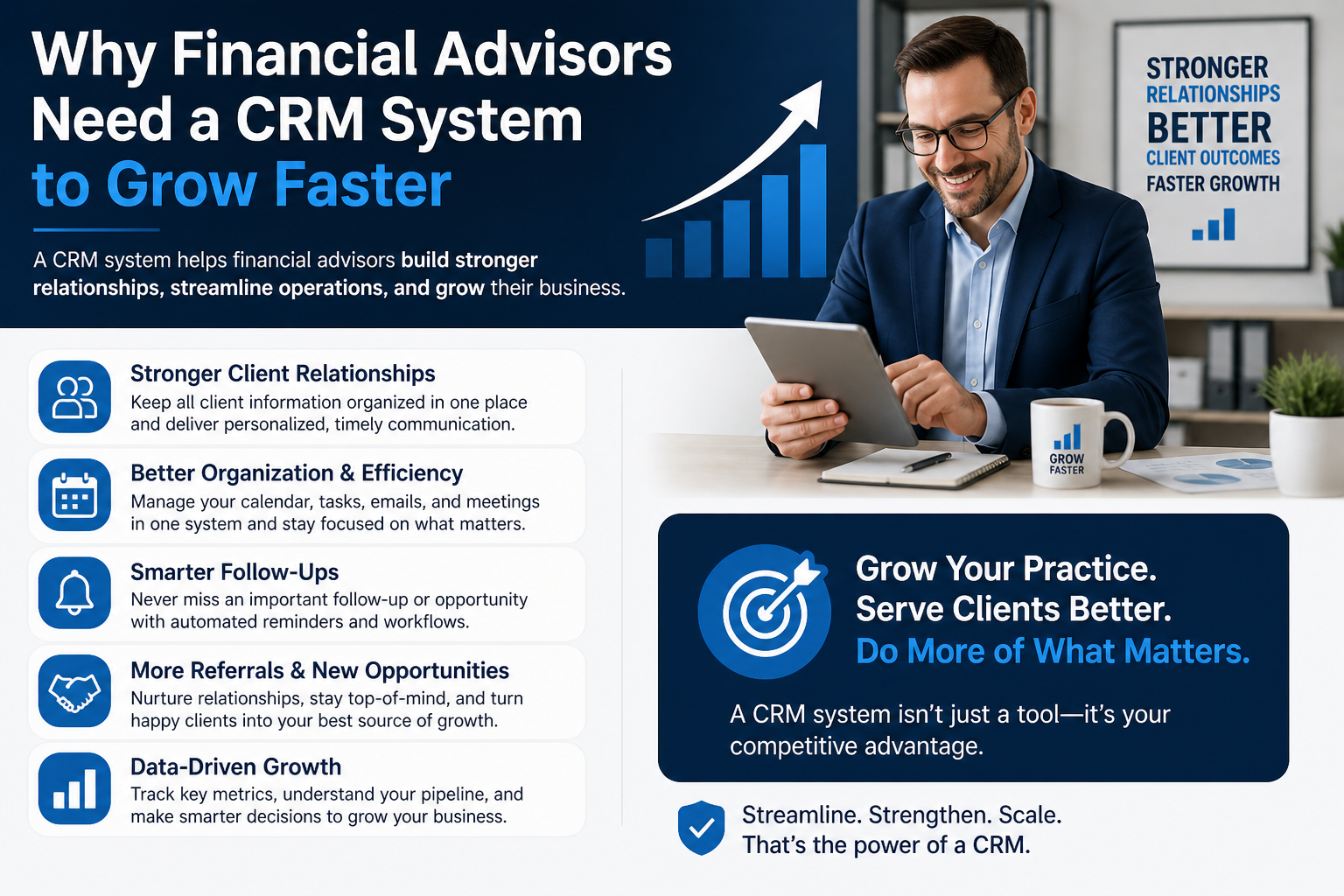
Discover how CRM systems help financial advisors manage clients, increase productivity, and boost revenue with smarter relationship management.
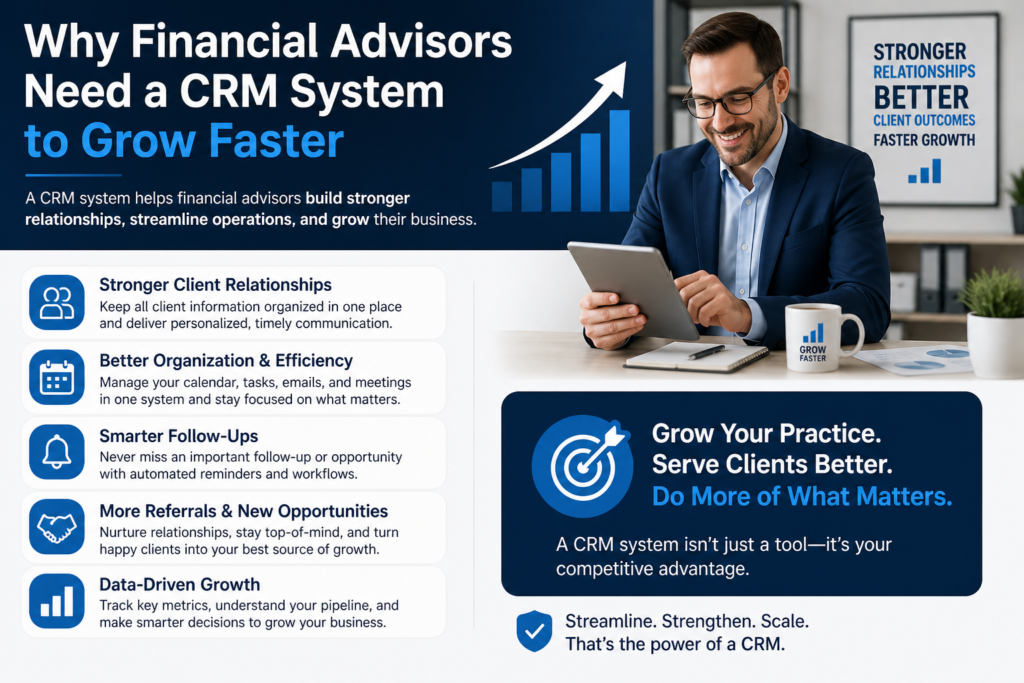
In today’s competitive financial landscape, growth is no longer just about acquiring new clients. It’s about managing relationships effectively, delivering consistent value, and operating with efficiency at scale. For financial advisors, this is where a CRM system becomes essential.
A Customer Relationship Management (CRM) system is not just a digital contact book. It is a structured platform that helps advisors organize client data, automate workflows, track interactions, and ultimately build stronger, long-term relationships. If growth is the goal, a CRM is one of the most practical tools to achieve it.
Let’s break down exactly why financial advisors need a CRM system and how it directly contributes to faster, more sustainable growth.
What Is a CRM System in Financial Services?
A CRM system in finance is designed specifically to manage client relationships, track financial interactions, and streamline advisory processes. Unlike generic tools, financial CRMs often include features tailored to compliance, portfolio tracking, and client lifecycle management.
Popular platforms like Salesforce CRM, HubSpot CRM, and Zoho CRM are widely used across industries, including financial advisory services.
1. Centralized Client Data Improves Efficiency
One of the biggest challenges advisors face is scattered information. Client details often sit across emails, spreadsheets, notes, and multiple tools. This leads to inefficiency and missed opportunities.
A CRM solves this by acting as a single source of truth.
With a CRM system, you can:
- Store all client profiles in one place
- Track communication history
- Access financial goals and investment preferences quickly
- Avoid duplication and data loss
This centralization reduces time spent searching for information and allows advisors to focus more on client engagement and strategy.
2. Better Client Relationship Management
Financial advising is built on trust. Clients expect personalized attention and timely communication. Without a system, maintaining this level of service becomes difficult as your client base grows.
A CRM helps you:
- Track every interaction with clients
- Set reminders for follow-ups
- Segment clients based on behavior or portfolio size
- Personalize communication at scale
When clients feel understood and valued, retention improves. And retaining clients is far more cost-effective than acquiring new ones.
3. Automation Saves Time and Reduces Errors
Manual processes slow down growth. Tasks like sending emails, scheduling meetings, or updating records consume valuable time.
CRM systems introduce automation into daily workflows.
Examples include:
- Automated email follow-ups after meetings
- Task reminders for important milestones
- Workflow automation for onboarding new clients
- Alerts for portfolio reviews or renewals
This reduces human error and frees up time for high-value activities like financial planning and client advisory.
4. Improved Lead Management and Conversion
Growth depends heavily on how well you handle leads. Without a structured process, potential clients can easily slip through the cracks.
A CRM system helps track the entire sales pipeline:
- Capture leads from multiple sources
- Assign and track lead status
- Monitor conversion rates
- Prioritize high-value prospects
With better visibility into your pipeline, you can identify bottlenecks and improve conversion rates. This directly impacts revenue growth.
5. Data-Driven Decision Making
Guesswork does not scale. Advisors need clear insights to make informed decisions.
CRM platforms provide analytics and reporting features such as:
- Client acquisition trends
- Revenue forecasting
- Performance tracking
- Client engagement metrics
These insights help you understand what is working and what needs improvement. Over time, this leads to more strategic growth.
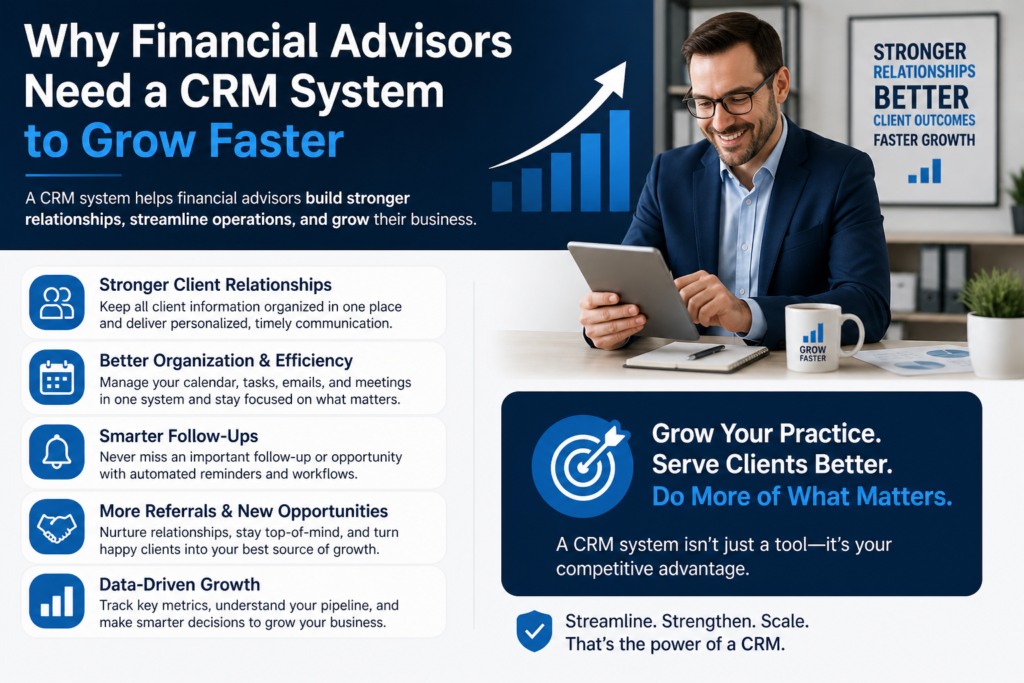
6. Enhanced Compliance and Record Keeping
The financial industry operates under strict regulatory requirements. Proper documentation and audit trails are not optional.
A CRM helps ensure compliance by:
- Maintaining detailed client records
- Logging communication history
- Providing secure data storage
- Supporting audit-ready documentation
This reduces risk and ensures that your practice stays aligned with regulatory standards.
7. Scalability Without Losing Personalization
As your client base grows, maintaining a personal touch becomes harder. This is where many advisors struggle.
A CRM allows you to scale while still offering personalized service.
You can:
- Segment clients based on preferences or behavior
- Customize communication strategies
- Track individual financial goals
- Deliver tailored recommendations
This balance between scale and personalization is key to sustainable growth.
8. Improved Team Collaboration
For advisory firms with multiple team members, coordination is critical. Without proper systems, communication gaps can lead to poor client experiences.
A CRM enables:
- Shared access to client data
- Task assignment and tracking
- Internal notes and updates
- Better coordination between advisors and support staff
This ensures consistency in service, regardless of who interacts with the client.
9. Stronger Client Retention and Loyalty
Growth is not just about new clients. Retaining existing clients plays a major role in long-term success.
A CRM helps improve retention by:
- Keeping communication consistent
- Anticipating client needs
- Providing timely financial advice
- Building long-term relationships
Satisfied clients are more likely to stay and refer others, creating a compounding growth effect.
10. Competitive Advantage in a Digital World
The financial advisory industry is becoming increasingly digital. Clients expect faster responses, personalized insights, and seamless communication.
Advisors using CRM systems are better positioned to:
- Respond quickly to client queries
- Provide data-backed recommendations
- Deliver a modern client experience
Those relying on manual processes will struggle to keep up.
Key Features Financial Advisors Should Look for in a CRM
Not all CRM systems are equal. When choosing a CRM, financial advisors should focus on features that directly support their workflow.
Important features include:
- Contact and relationship management
- Workflow automation
- Reporting and analytics
- Integration with financial tools
- Security and compliance support
- Mobile accessibility
Choosing the right CRM ensures that the system aligns with your business goals.
Common Mistakes to Avoid When Using a CRM
Simply implementing a CRM is not enough. How you use it matters.
Avoid these common mistakes:
- Not updating client data regularly
- Overcomplicating workflows
- Ignoring analytics and reports
- Lack of team training
- Using it only as a contact database
A CRM should be an active part of your daily operations, not a passive tool.
Real Impact: How CRM Drives Faster Growth
When used correctly, a CRM directly contributes to growth in multiple ways:
- Faster response times improve client satisfaction
- Better organization increases productivity
- Automation reduces operational costs
- Insights lead to smarter decisions
- Stronger relationships boost retention and referrals
All these factors combine to create a scalable and efficient advisory business.
