
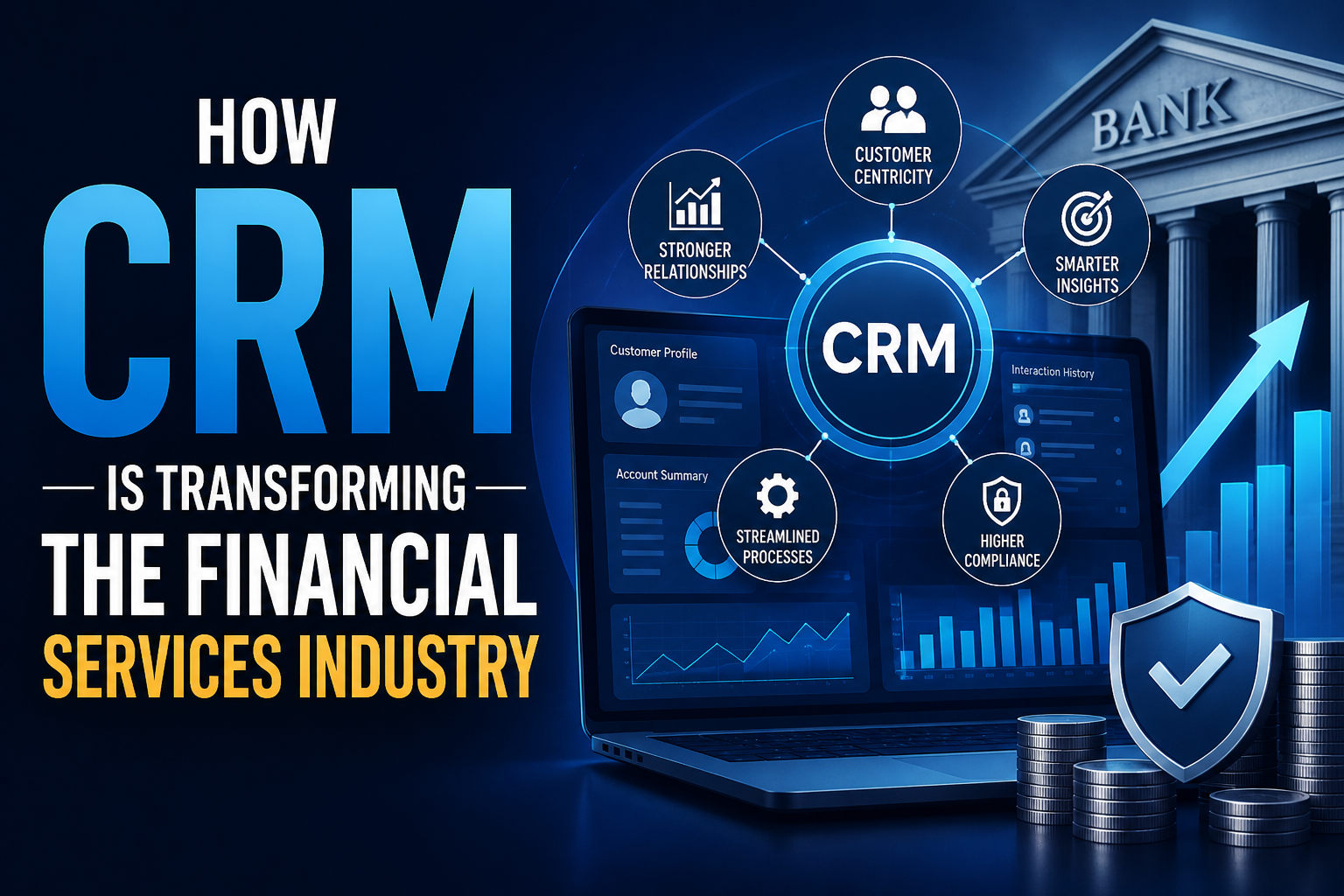
Discover how CRM systems are reshaping financial services by improving customer relationships, boosting efficiency, and driving revenue growth.
The financial services industry is going through a major shift. Customer expectations are rising, competition is getting tougher, and digital transformation is no longer optional. In this environment, Customer Relationship Management (CRM) systems have become a critical tool for banks, insurance companies, fintech firms, and investment advisors.
CRM is not just about storing customer data anymore. It has evolved into a powerful platform that helps financial institutions understand clients better, improve service delivery, and drive revenue growth.
Let’s break down how CRM is transforming the financial services industry and why it matters now more than ever.
What is CRM in Financial Services?
CRM in financial services refers to software that helps institutions manage customer interactions, track financial behavior, and streamline operations across sales, marketing, and support.
Unlike traditional systems, modern CRM platforms bring all customer data into one place. This includes transaction history, communication records, preferences, and even predictive insights.
For financial institutions, this means having a 360-degree view of each client, which is essential for delivering personalized services.
Why CRM Matters More Than Ever
Financial customers today expect the same level of service they get from tech companies. They want fast responses, personalized offers, and seamless digital experiences.
At the same time, financial institutions must deal with strict regulations, data security requirements, and complex products.
CRM sits right in the middle of these challenges. It helps companies stay compliant while improving customer experience.
Key Ways CRM is Transforming Financial Services
1. Personalized Customer Experience
One of the biggest impacts of CRM is personalization.
With access to detailed customer data, financial institutions can tailor their services based on individual needs. For example:
- Recommending investment plans based on income and goals
- Offering loan products suited to credit history
- Sending timely reminders for payments or renewals
This level of personalization builds trust and strengthens long-term relationships.
Instead of treating customers as account numbers, CRM helps treat them as individuals.
2. Improved Customer Retention
Acquiring a new customer is expensive. Retaining an existing one is far more cost-effective.
CRM systems help track customer behavior and identify early signs of dissatisfaction. For example:
- Reduced account activity
- Missed payments
- Increased complaints
With these insights, companies can take proactive steps like offering support, incentives, or tailored solutions.
This reduces churn and increases customer lifetime value.
3. Streamlined Sales Process
Financial products often involve long and complex sales cycles.
CRM simplifies this by organizing leads, tracking interactions, and automating follow-ups.
Sales teams can:
- Prioritize high-value leads
- Track progress through the sales pipeline
- Automate reminders and communications
This leads to faster deal closures and better conversion rates.
For example, a relationship manager can instantly see a client’s history and recommend the right product without starting from scratch.
4. Better Compliance and Risk Management
Compliance is a major concern in financial services.
CRM systems help maintain detailed records of customer interactions, transactions, and approvals. This makes it easier to meet regulatory requirements.
Key benefits include:
- Automated documentation
- Audit trails for every interaction
- Secure data storage
In case of audits, institutions can quickly retrieve the required information.
This reduces risk and ensures transparency.
5. Enhanced Data Analytics and Insights
Data is one of the most valuable assets in financial services.
CRM platforms use analytics and AI to turn raw data into actionable insights.
For example:
- Identifying cross-selling opportunities
- Predicting customer behavior
- Segmenting customers based on value
These insights help institutions make smarter decisions and improve overall strategy.
Instead of guessing what customers want, companies can rely on data-driven insights.
6. Omnichannel Communication
Customers interact with financial institutions through multiple channels such as email, phone, mobile apps, and social media.
CRM systems integrate all these channels into one platform.
This means:
- Consistent communication across channels
- Faster response times
- Better customer experience
For example, if a customer starts a query on email and follows up via phone, the support team already has the context.
This eliminates repetition and improves satisfaction.
7. Automation of Routine Tasks
Financial services involve many repetitive tasks such as data entry, follow-ups, and report generation.
CRM automates these tasks, freeing up time for employees to focus on more important work.
Automation can include:
- Sending reminders for payments
- Scheduling meetings
- Generating reports
This improves efficiency and reduces human errors.
8. Stronger Customer Relationships
At its core, CRM is about building relationships.
By keeping track of every interaction, financial institutions can engage with customers in a more meaningful way.
For example:
- Sending personalized greetings or offers
- Following up after major financial decisions
- Providing timely advice
These small actions make a big difference in building trust and loyalty.
Real-World Use Cases of CRM in Financial Services
Banking
Banks use CRM to manage customer accounts, track interactions, and offer personalized services.
For example, a bank can recommend a credit card based on a customer’s spending habits.
Insurance
Insurance companies use CRM to manage policies, claims, and customer communication.
Agents can quickly access customer details and provide faster service.
Wealth Management
Wealth managers use CRM to track client portfolios, investment preferences, and financial goals.
This helps in providing tailored investment advice.
Fintech
Fintech companies rely heavily on CRM to manage digital interactions and scale quickly.
They use CRM to automate onboarding, customer support, and engagement.
Challenges in CRM Adoption
While CRM offers many benefits, implementation is not always easy.
Common challenges include:
- High initial cost
- Data migration issues
- Employee resistance to new systems
- Integration with existing tools
To overcome these challenges, companies need proper planning, training, and support.
Future of CRM in Financial Services
The future of CRM is closely tied to technologies like artificial intelligence, machine learning, and automation.
Some emerging trends include:
AI-Powered Insights
CRM systems will become smarter, offering predictive insights and recommendations.
Hyper-Personalization
Services will be tailored at an even deeper level using real-time data.
Voice and Chat Integration
Customers will interact with financial institutions through chatbots and voice assistants.
Enhanced Security
With growing cyber threats, CRM systems will focus more on data protection.
Final Thoughts
CRM is no longer just a support tool. It has become a strategic asset for financial institutions.
From improving customer experience to increasing efficiency and ensuring compliance, CRM is transforming every aspect of the financial services industry.
Companies that invest in the right CRM strategy will be better positioned to meet customer expectations, stay competitive, and drive long-term growth.
In a world where customer experience defines success, CRM is not optional. It is essential.
