
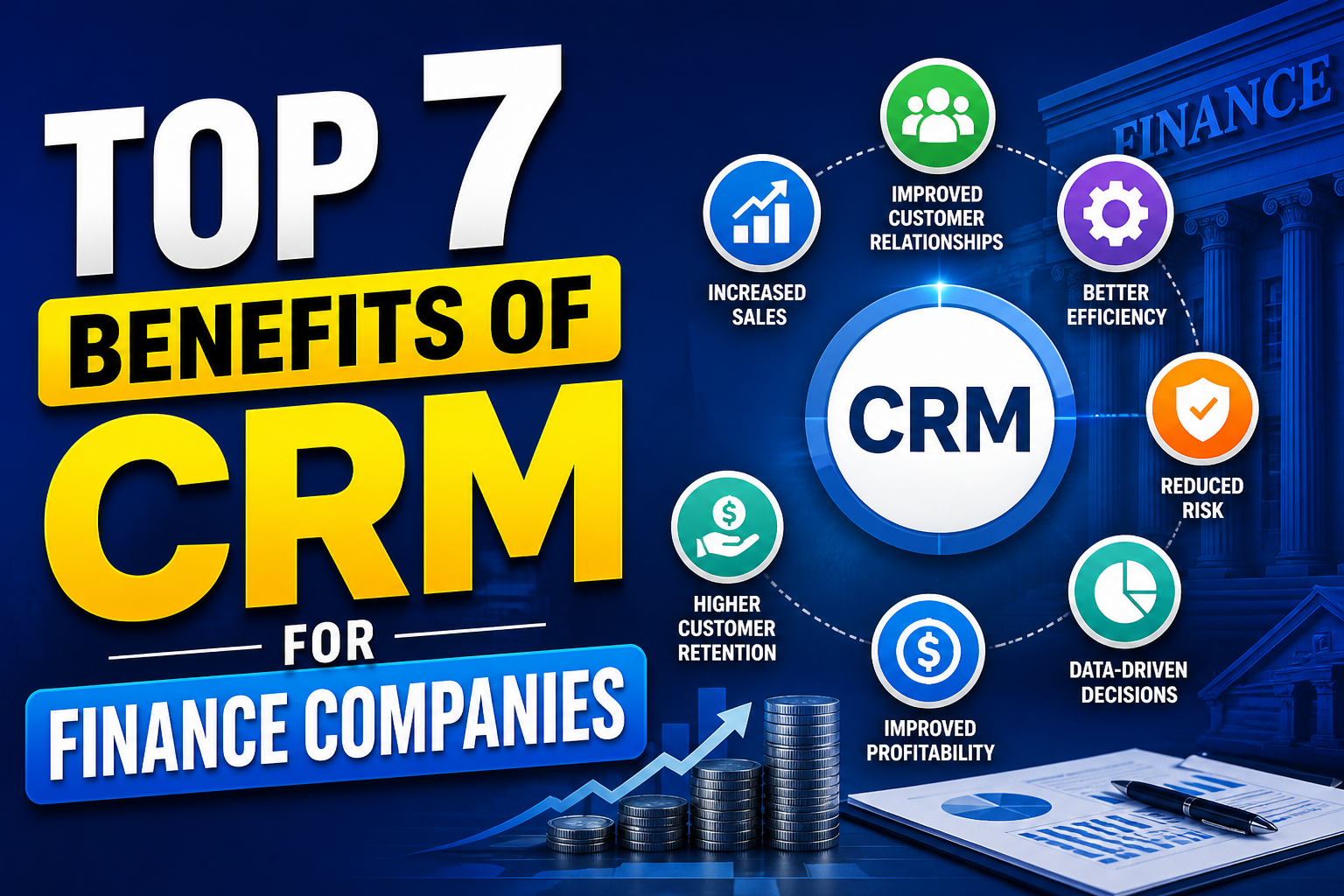
Learn the key benefits of using CRM in finance, from better client management to increased sales and streamlined operations.
The financial services industry is going through a major shift. Customers expect faster responses, personalized advice, and seamless digital experiences. At the same time, firms have to deal with strict regulations, rising competition, and large volumes of sensitive data.
This is where a Customer Relationship Management (CRM) system becomes more than just a tool. It turns into a core part of how finance companies operate, grow, and stay competitive.
Platforms like Salesforce, HubSpot, and Zoho are widely used across financial services to manage client relationships, automate workflows, and improve decision-making.
In this blog, we’ll break down the top 7 benefits of CRM for finance companies, and why adopting one is no longer optional.
1. Centralized Customer Data Management
One of the biggest challenges in finance is handling scattered customer data. Information often lives across emails, spreadsheets, call logs, and different departments.
A CRM solves this by bringing everything into a single system.
With a CRM, finance companies can:
- Store client profiles in one place
- Track transaction history and interactions
- Access real-time updates across teams
This centralized view allows relationship managers and advisors to quickly understand a client’s financial behavior, preferences, and history without wasting time searching across systems.
In practical terms, this leads to faster service, fewer errors, and a much smoother client experience.
2. Improved Customer Experience
Customer experience is a key differentiator in finance today. Clients expect personalized communication and proactive support.
A CRM helps finance companies deliver exactly that.
By using CRM data, firms can:
- Personalize communication based on client needs
- Send timely reminders for renewals, payments, or investments
- Offer tailored financial products
For example, if a client shows interest in investment products, the CRM can trigger targeted recommendations or follow-ups. This level of personalization builds trust and strengthens long-term relationships.
3. Enhanced Sales and Lead Management
Finance companies rely heavily on converting leads into clients. Without a structured system, leads can easily get lost or mishandled.
CRM systems streamline the entire sales pipeline.
Key capabilities include:
- Lead tracking from multiple channels
- Automated follow-ups
- Pipeline visibility
- Performance tracking for sales teams
With clear visibility into where each lead stands, sales teams can prioritize high-value opportunities and close deals more efficiently.
This directly improves conversion rates and revenue growth.
4. Better Compliance and Risk Management
Compliance is non-negotiable in financial services. Companies must follow strict regulations related to data handling, reporting, and customer interactions.
A CRM helps reduce compliance risks by:
- Maintaining detailed audit trails
- Storing secure and structured customer data
- Automating documentation processes
- Ensuring consistent communication records
Having all interactions recorded in one system makes it easier to meet regulatory requirements and respond to audits.
It also minimizes the risk of human error, which can be costly in finance.
5. Automation of Routine Tasks
Finance professionals spend a lot of time on repetitive tasks such as data entry, follow-ups, and reporting.
CRM platforms automate many of these processes.
Common automation features include:
- Email and SMS follow-ups
- Task reminders
- Workflow automation
- Report generation
This allows teams to focus on higher-value activities like client advisory and strategic planning instead of manual work.
The result is improved productivity and better use of resources.
6. Data-Driven Decision Making
In finance, decisions should always be backed by data. A CRM provides powerful analytics and reporting tools that help companies make smarter choices.
With CRM insights, finance firms can:
- Analyze customer behavior and trends
- Track sales performance
- Identify growth opportunities
- Forecast revenue
For example, management can quickly see which financial products are performing well and which ones need improvement.
This kind of visibility helps businesses stay agile and competitive in a fast-changing market.
7. Stronger Client Retention and Loyalty
Acquiring new clients is expensive. Retaining existing ones is far more cost-effective and profitable.
CRM systems play a major role in improving client retention.
They help finance companies:
- Maintain consistent communication
- Track client satisfaction
- Address issues proactively
- Build long-term engagement strategies
By understanding client needs and staying connected, companies can create stronger relationships and reduce churn.
Over time, this leads to higher lifetime value per customer and sustainable growth.
Why CRM is Essential for Modern Finance Companies
The financial industry is becoming more customer-centric and technology-driven. Companies that rely on outdated systems struggle to keep up with expectations.
A CRM is no longer just a “nice-to-have” tool. It is a strategic asset.
It connects different parts of the business:
- Sales
- Customer support
- Compliance
- Marketing
This alignment ensures that everyone works with the same data and goals, leading to better outcomes across the organization.
Choosing the Right CRM for Your Finance Business
Not all CRM systems are built the same. Finance companies should look for solutions that offer:
- Strong data security and encryption
- Compliance-friendly features
- Customization for financial workflows
- Integration with existing tools
- Scalability for future growth
Solutions like Salesforce Financial Services Cloud or Zoho CRM are designed with industry-specific needs in mind.
The right choice depends on your company size, budget, and operational complexity.
Final Thoughts
CRM is transforming how finance companies operate. From managing client relationships to improving compliance and driving revenue, its impact is significant.
To summarize, the top benefits of CRM for finance companies include:
- Centralized data management
- Better customer experience
- Improved sales performance
- Stronger compliance
- Automation of routine tasks
- Data-driven decisions
- Higher client retention
If your finance business is still relying on manual processes or disconnected systems, adopting a CRM could be one of the most important steps you take.
It’s not just about technology. It’s about building stronger relationships, making smarter decisions, and staying competitive in a rapidly evolving industry.
